Having personally struggled with several eating disorders, I made these infographics in 2021 to highlight the bidirectional oral health implications of eating disorders and highlight ways for dental professionals to help. These infographics were featured on Harvard ASDA's official Instagram Page.
My Academic Vision
I am currently pursuing a unique interdisciplinary training pathway at Columbia University College of Dental Medicine as the first student in school history to pursue a triple degree DDS/MPH/MA program. I am passionate about public health, health policy, dental education, interprofessional collaboration, and technology innovation. One of my primary interests is dental education and understanding how to better prepare future providers to deliver compassionate, culturally responsive care. My research examines how to improve training for patient populations who often receive limited attention within traditional dental curricula (e.g. patients with eating disorders, history of trauma, special needs). I am also passionate about leveraging technology to improve learner engagement and patient care. Through my Masters of Education, I have conducted scholarly projects in artificial intelligence, virtual reality, and digital educational platforms. My work in public health and policy is informed by my clinic experience, where I experience how policy decisions influence access to care, insurance coverage, and prevention strategies. My appointments on ADA National Fluoridation Advisory Committee and NYSDA Substance Use and Well-Being Committee provide me valuable exposure to how policy impacts our patients. Through my research in fluoride policy and asthma disparities, combined with my lobbying experience and consultant roles in organized dentistry, I hope to contribute to evidence-based policies that improve population health. A central theme throughout my work is interprofessional collaboration. This goal has shaped projects including oral health education for OB/GYN residents, oral health education for for pediatric medical clerkships, and creation of an eating disorders educational module that incorporates perspectives from dentistry, psychiatry, psychology, and primary care. As someone with a creative art and music background, I have also used both art and music to bridge interprofessional gaps in Columbia University and foster cross-school collaboration. As a National Health Services Corps Scholar, I plan to be practicing in a federally qualified health center after graduation, working with medically complex patients and serving as a safety net provider. As I consider my long-term careers goals, I hope to: 1. Practice clinically in a combination of private and public practice (FQHC, free clinic) 2. Contribute to organized dentistry and shape dental policy through leadership & advocacy. 3. Teach in the future at a dental institution, continuing my contributions to research, curricular innovations, and interprofessional collaboration.

Why Dentistry
Watch my TedXTalk for a more personal version of the story
I wrote and made this artwork "Why Dentistry" in 2022, but reading it now, this still holds true. To me, dentistry is like painting an artwork or composing a guzheng 古筝 song: both require sensitivity of touch, creative visualization, and the ability to sculpt not just the intricate details but also the larger symphony of what our mouth’s blank canvas can become: the smile. Dental art is also a science. It requires a thorough understanding of how dentistry’s “paints” react, solidify, and set according to different temperatures, moisture levels, time frames and mixtures, whether it is the chemical reaction of alginate (drawn as d-mannuronic acid and l-guluronic acid), or the blue-light stimulated 3d polymerization of composite resin in restorative fillings. That's when my organic and inorganic chemistry knowledge merges with my love for biology, from the aromatic ring in lidocaine improving lipid solubility, to fluoride-assisted remineralization of enamel (depicted as Ca10(PO4)6(OH)2 +2F− → Ca10(PO4)6(F)2 + 2OH−). One of my favorite “biologies” is microbiology. The oral cavity is an entryway, living environment, and source of replication for millions of microbes (I’ve drawn a few: SARS COV-2, HIV, E. Coli, Pneumococcus, Diphtheria, Tetanus, etc), some of which have sparked major epidemics and pandemics. This oral-systemic link is where my interest in science “flows” into the heart and lungs of my passion for public health. I’ve seen how the mouth is often the first place to detect disease, cancers, and immune system dysfunction; how poor oral health is linked with heart disease, diabetes, COVID-19, Alzheimer's, and other synergistic diseases rooted in socioeconomic circumstances. Given that dental decay is the most common disease in the world, and that cumulative national costs for dental treatment in many countries are higher than those for cancers and heart disease, I hope to be advocating for policies that not only increase upstream prevention and integration (depicted by superior vena cava flowing up to globe) but also prioritize resource conservation and our fragile relationship with Planet Earth. Public health cannot be improved without improving oral health, but the “heart” (aortic artery flowing upwards) of our health is also connected to our brain, which is where my love for psychology comes into the picture. As a Psychology major, I understand that our mental health influences oral health through biological channels (systemic inflammation and hormonal imbalance) and psychosocial channels (motivation, social habits, dental fear and anxiety). Meanwhile, our oral health reciprocally affects our mental health by impacting our ability to eat, talk, work, sleep, and smile: a key to confidence, identity, and social mobility. As a dentist, I hope to use tools of psychology to restructure phobias and integrate art and music therapy into dental settings--returning full circle to my favorite multi-colored “hues'' and “melodies.” The dental field is growing at such a fast rate. With a passion for teaching, I hope shape the dental curriculum so that cultural competency is not just a strength but a fundamental core principle. So that mental-health informed dental care is always built from acknowledging social determinants of health. So that we can work collaboratively with all disciplines to tackle the global burden of oral disease. So when people ask me “why do you want to be a dentist?” I say that “not just a dentist but an oral health physician, an oral health advocate, and an oral health educator." And who knows--maybe I’ll be adding more pieces to my “why dentistry” painting in four years.

Reflecting on My MPH
Click on each image to access my full reflection


For more info about me, check out:

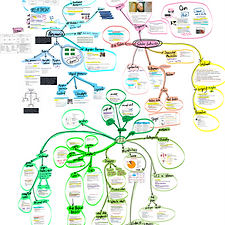
You are free to download any of my notes, tree diagrams, and summary flow charts for medical and dental school!


Performed 5 times in Carnegie Hall, 2 times in the Metropolitan Museum, 2 times in McCarter Theatre

Sold by Brown University Bookstore and featured on Columbia's Global Consortium of Climate Health
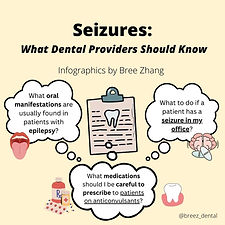
Infographics that explain medical/dental concepts, tackle advocacy, and educate patients!